Interior Painting Prep Done Right in Eagle
Most paint jobs that look bad after a year or two have one thing in common - the prep was rushed. Surfaces weren't properly protected, fixtures were left uncovered, and paint went on top of surfaces that weren't ready for it. That's how you end up with sloppy edges, overspray on things it shouldn't touch, and a finish that just doesn't hold up.
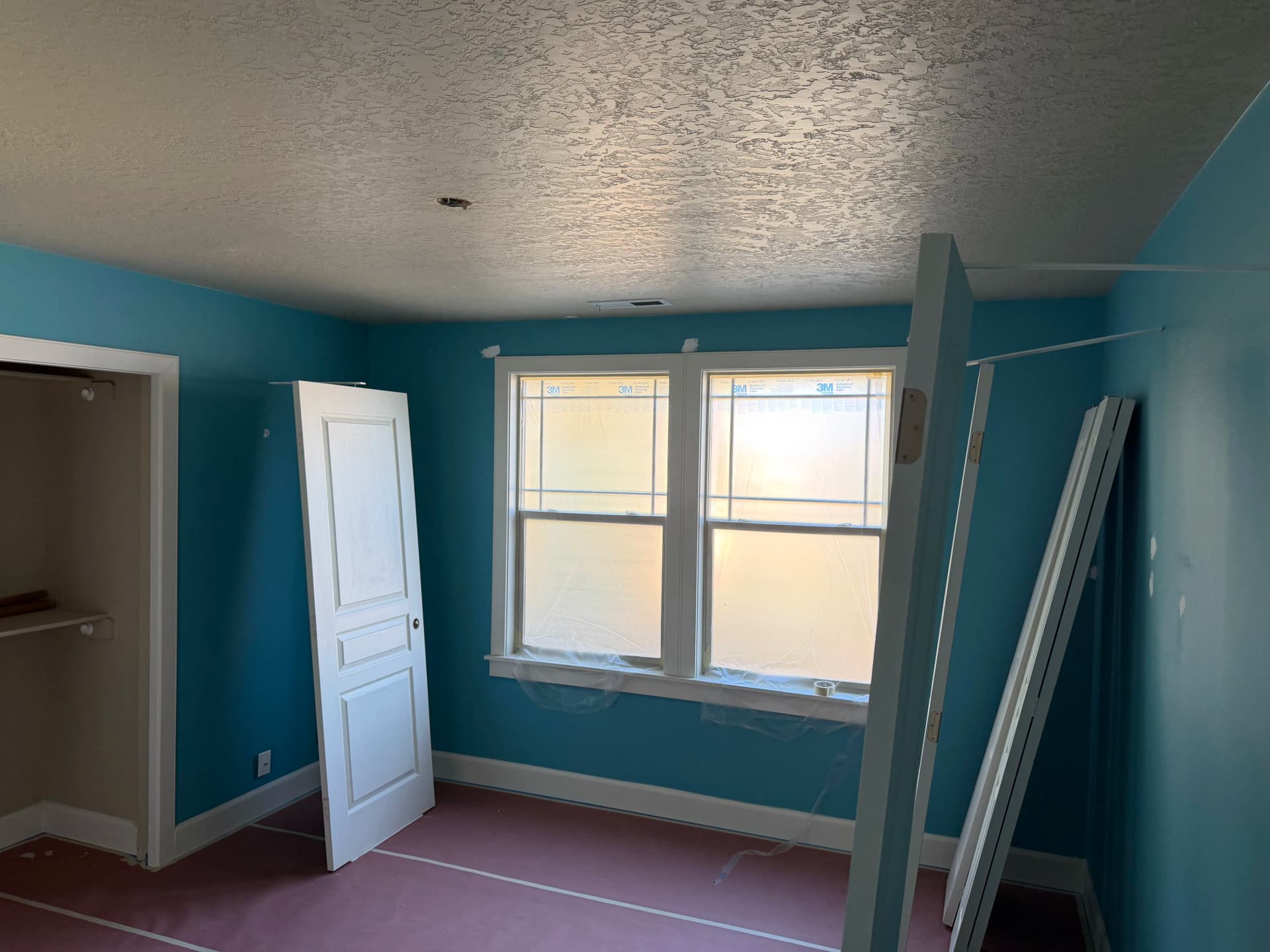
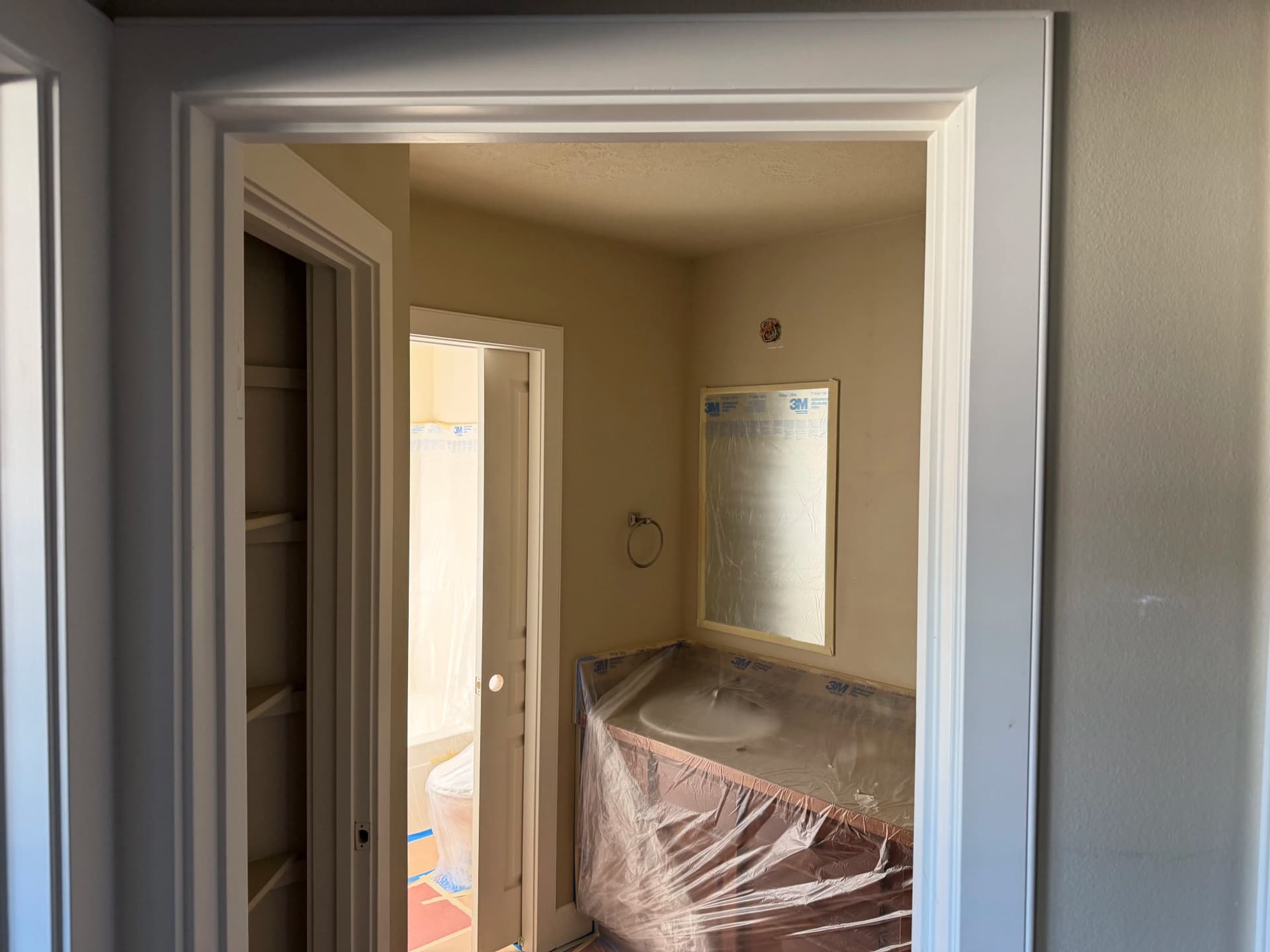
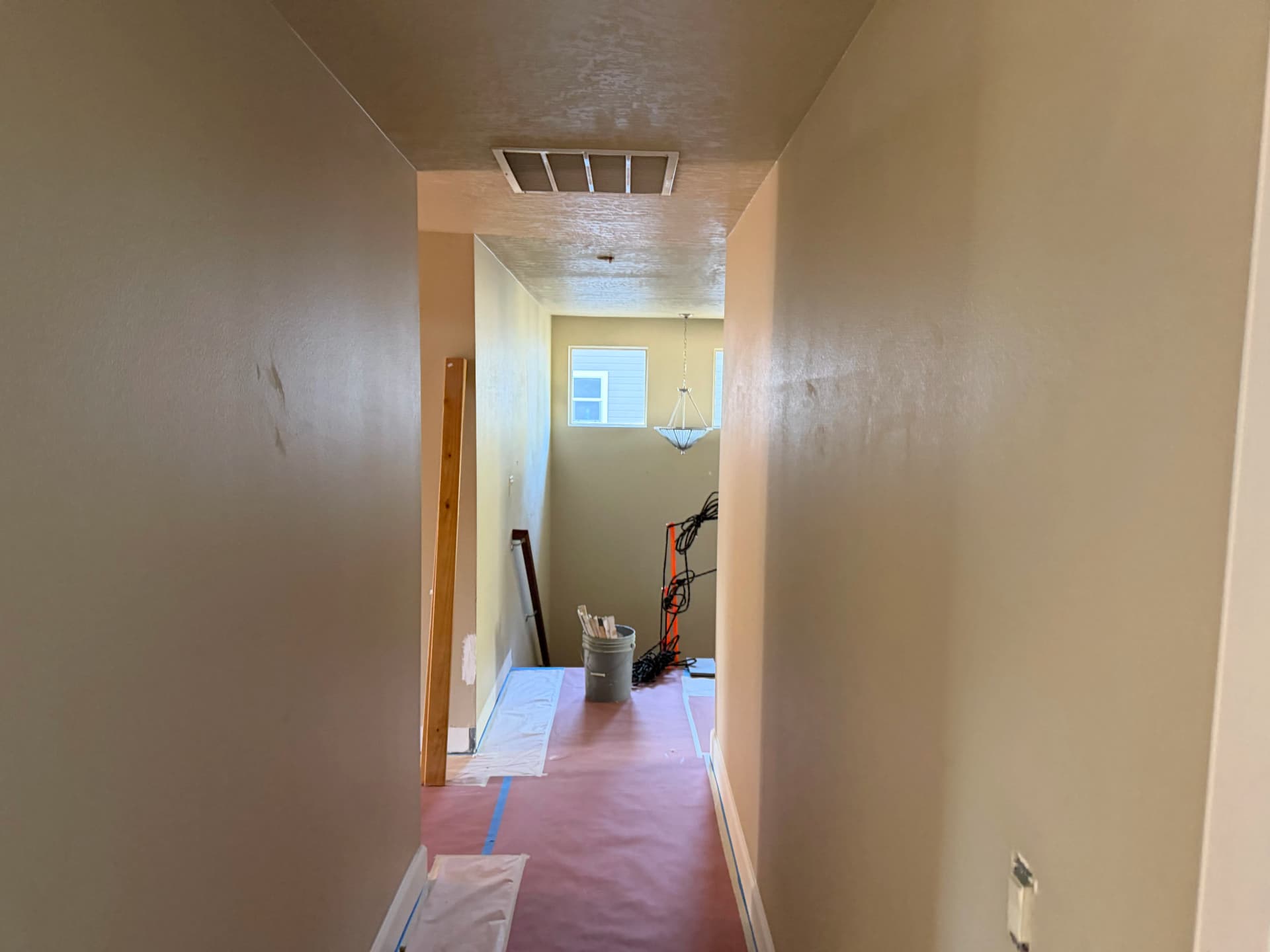
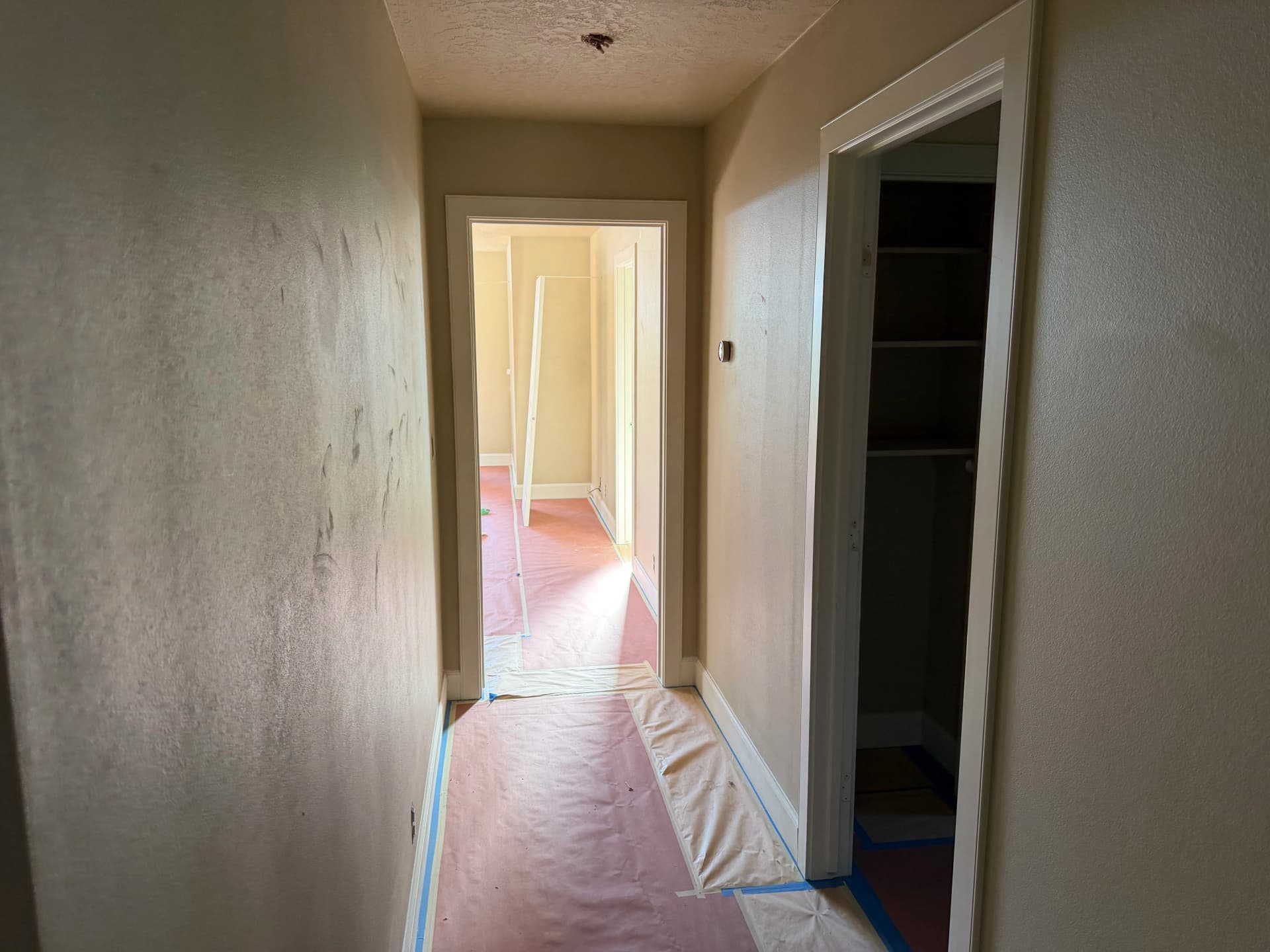
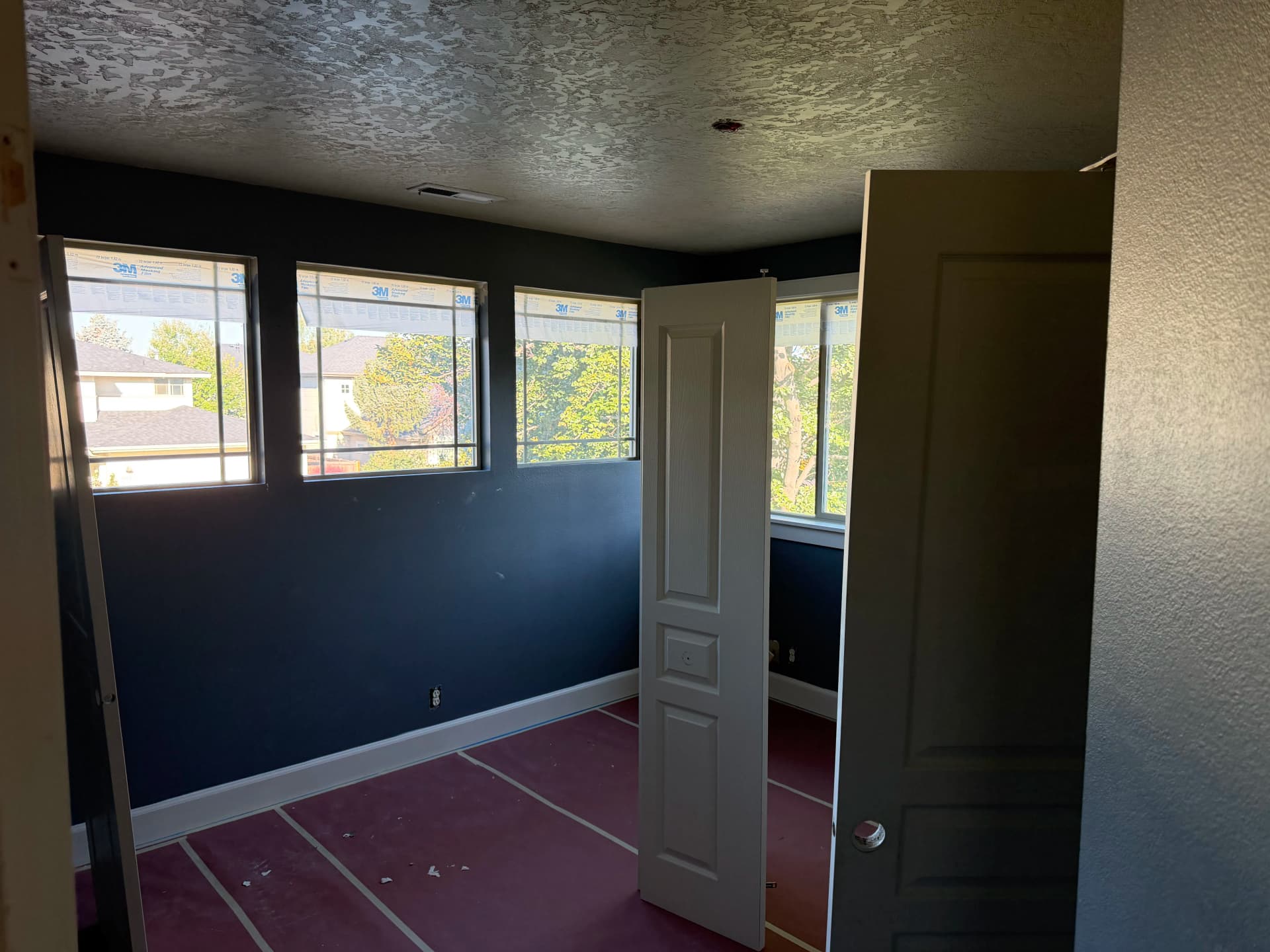
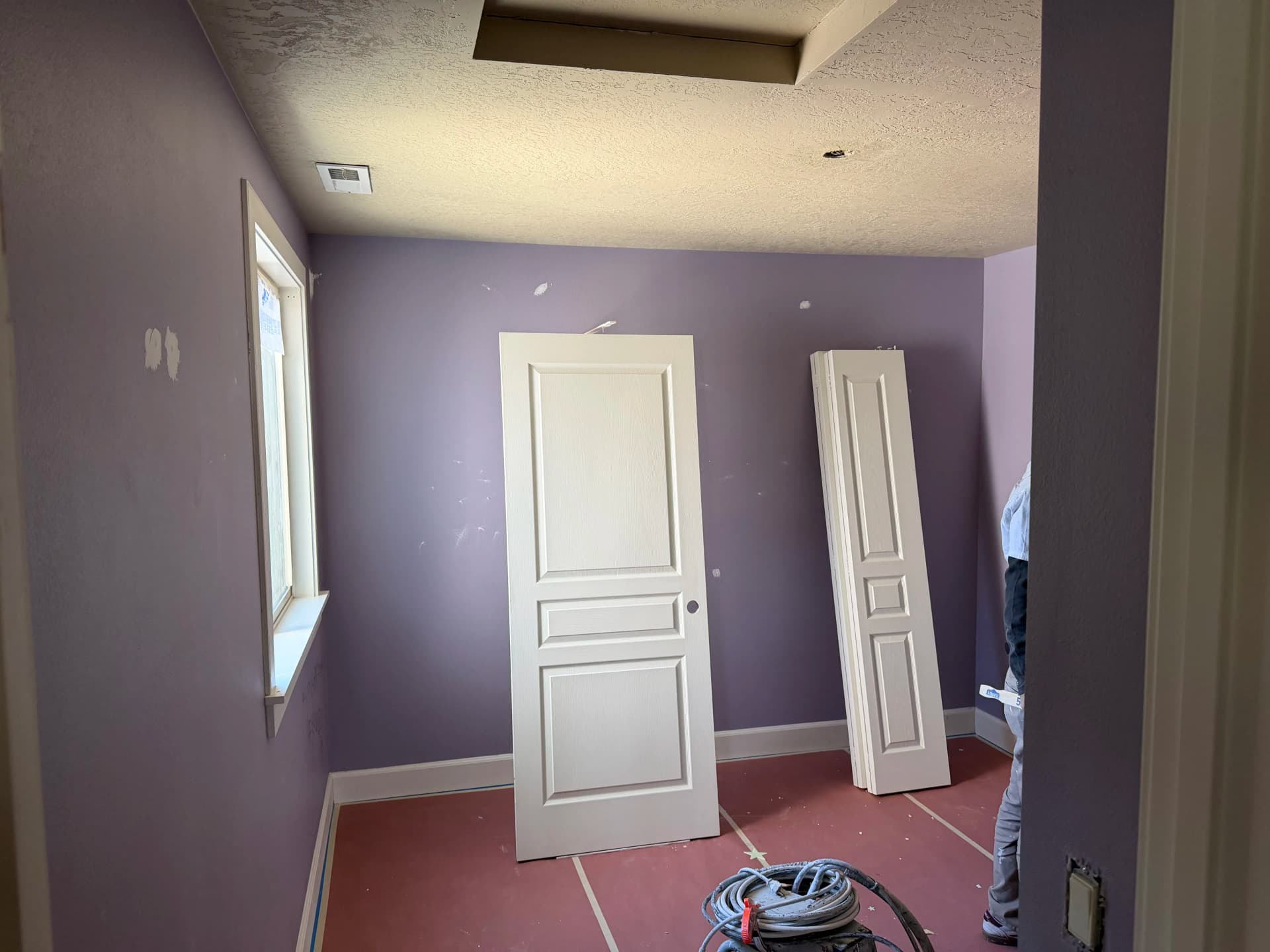
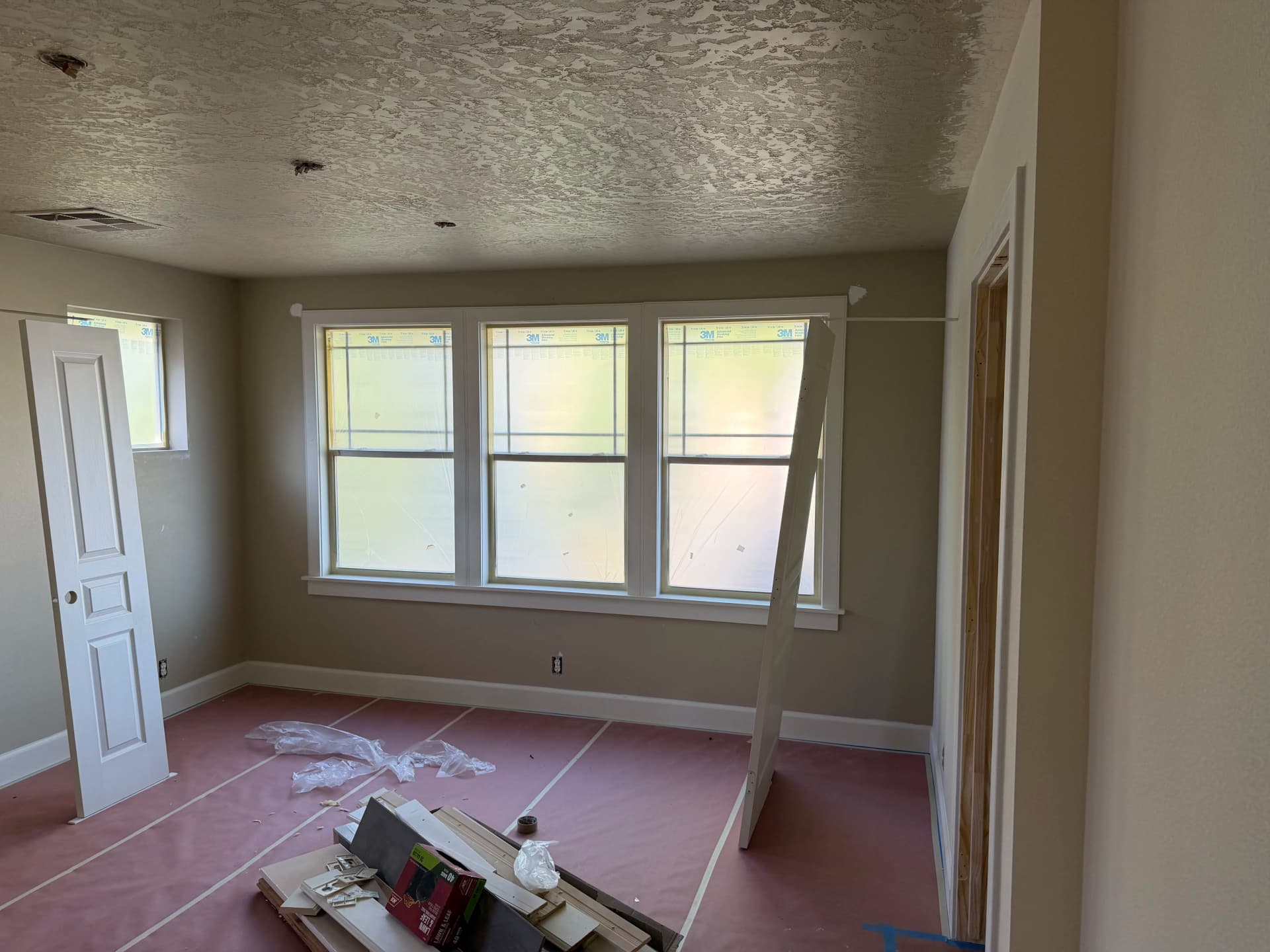
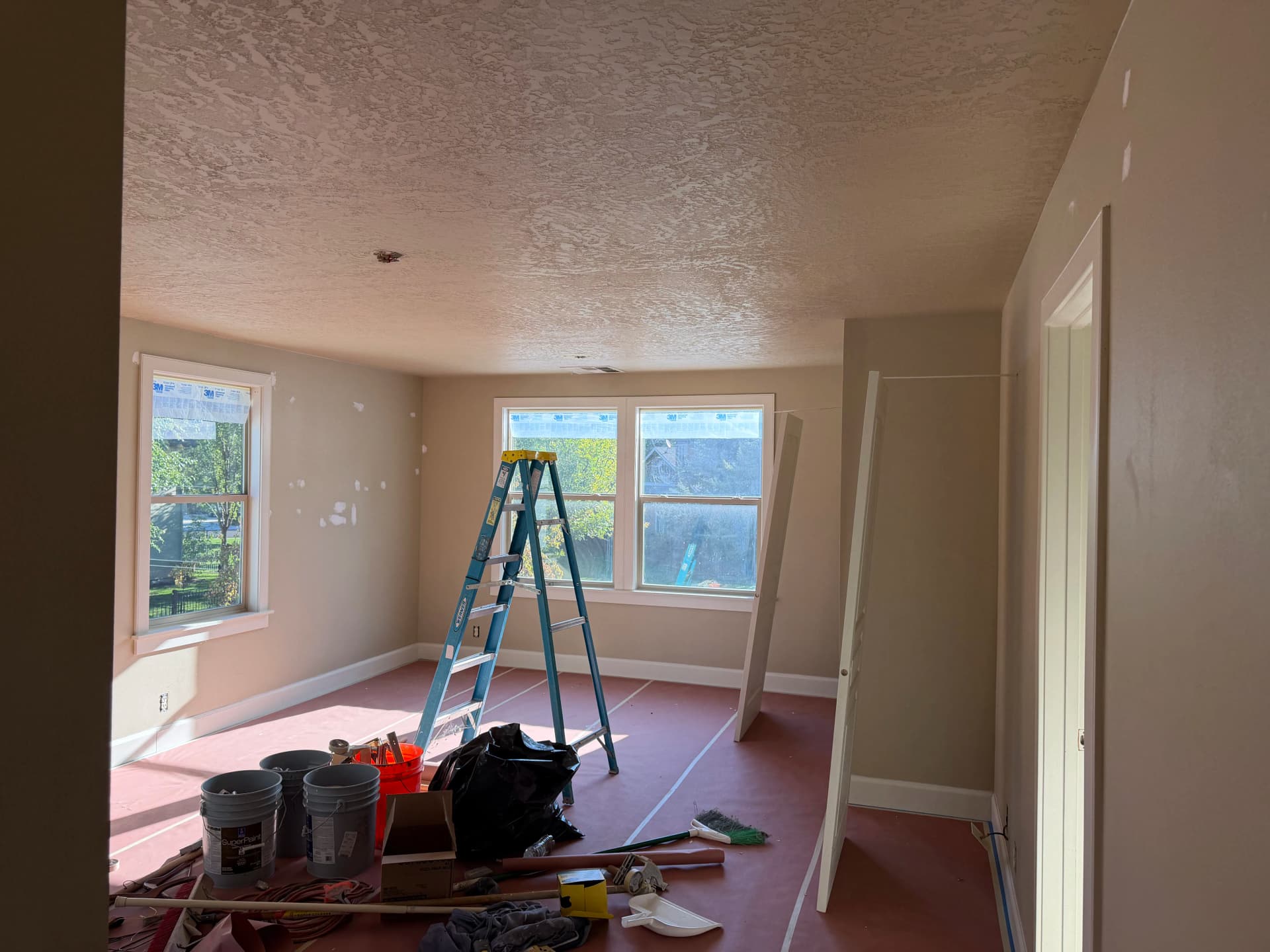
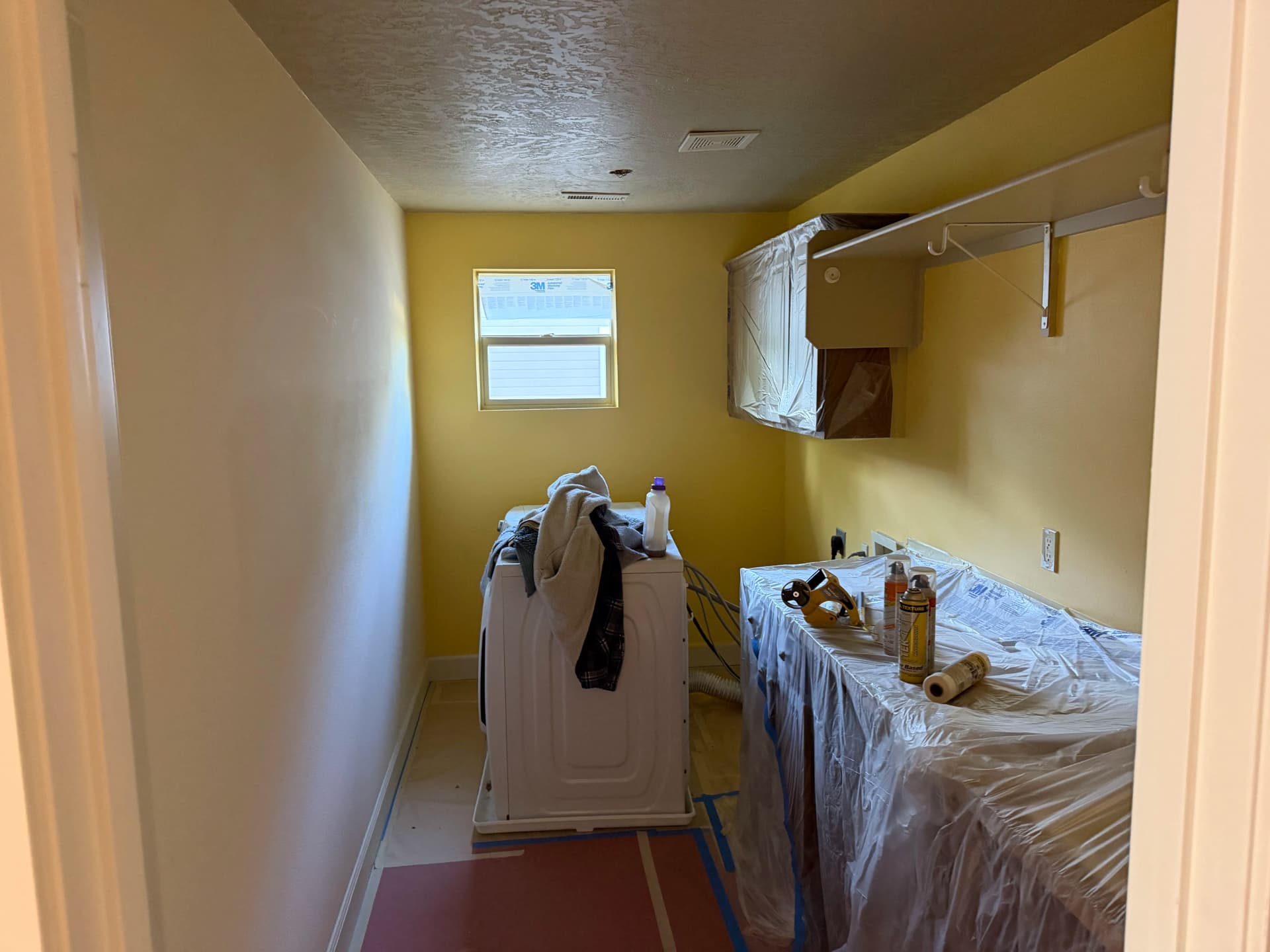
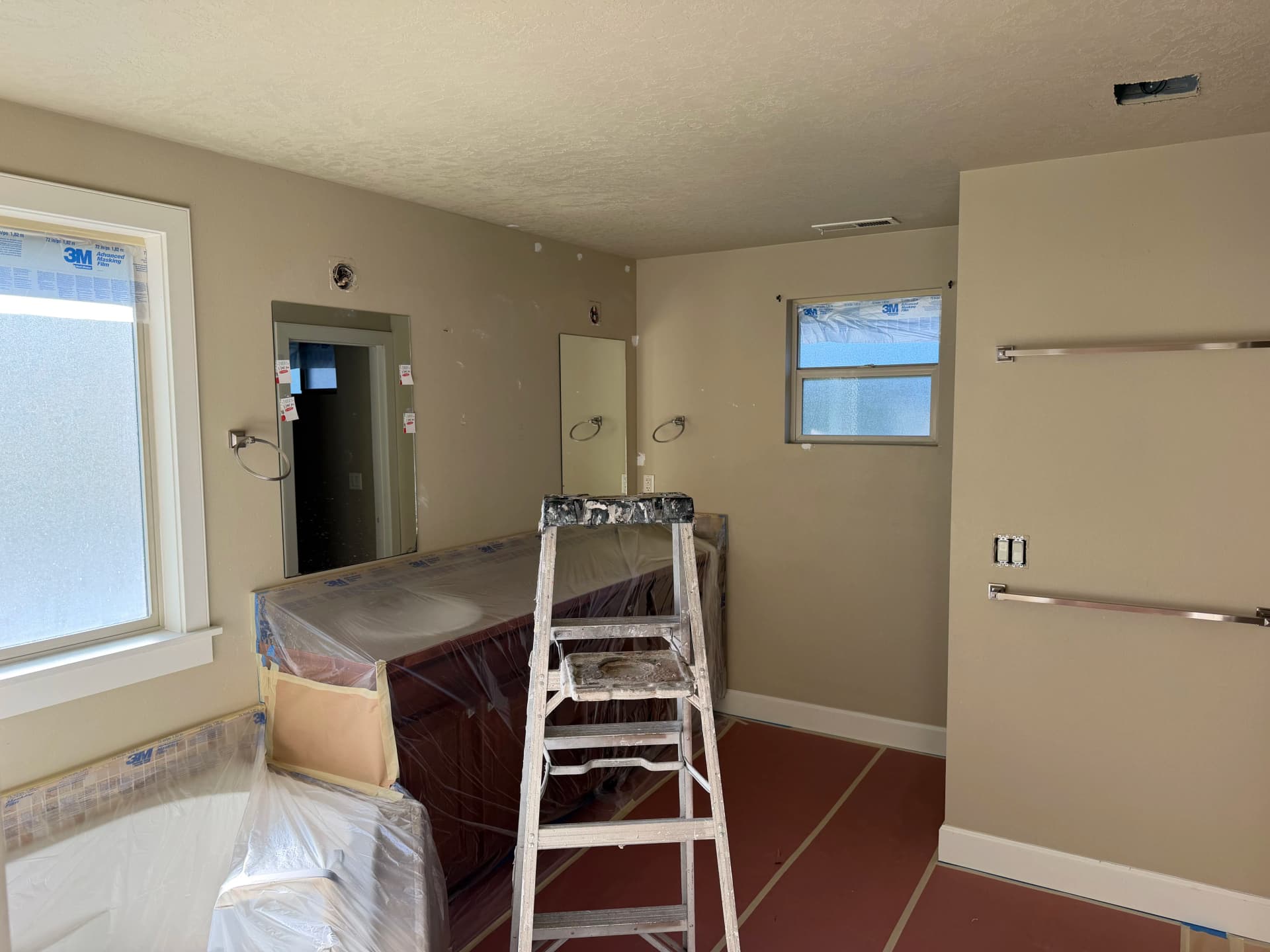
We don't work that way. Before a single drop of paint goes on the wall, we take the time to cover floors with rosin paper and tape it down clean, wrap fixtures and vanities in plastic, and mask off windows with 3M film. Every room gets the same treatment - whether it's a bedroom, a hallway, a bathroom, or a laundry room. Nothing gets skipped.
This Eagle home is a good example of what proper prep looks like across a full interior. Multiple rooms, multiple colors, different surface types - and every single space set up the same way before any color went on. The floors are protected edge to edge, the trim is sharp, and fixtures are fully wrapped so they come out clean on the other side.
This kind of prep is also what makes drywall repair blend in seamlessly. When you're patching walls before painting, those spots need to be properly primed and blended before color goes over them. Skipping that step is one of the most common reasons touch-up patches stand out after the job is done. We handle both - the repair and the paint - so everything comes out consistent.
The result of doing it this way is a finish that actually looks the way it's supposed to. Clean lines, no damage to floors or fixtures, and color that goes on even because the surface underneath was ready for it. That's the difference between a paint job that lasts and one that starts showing its age way too soon.